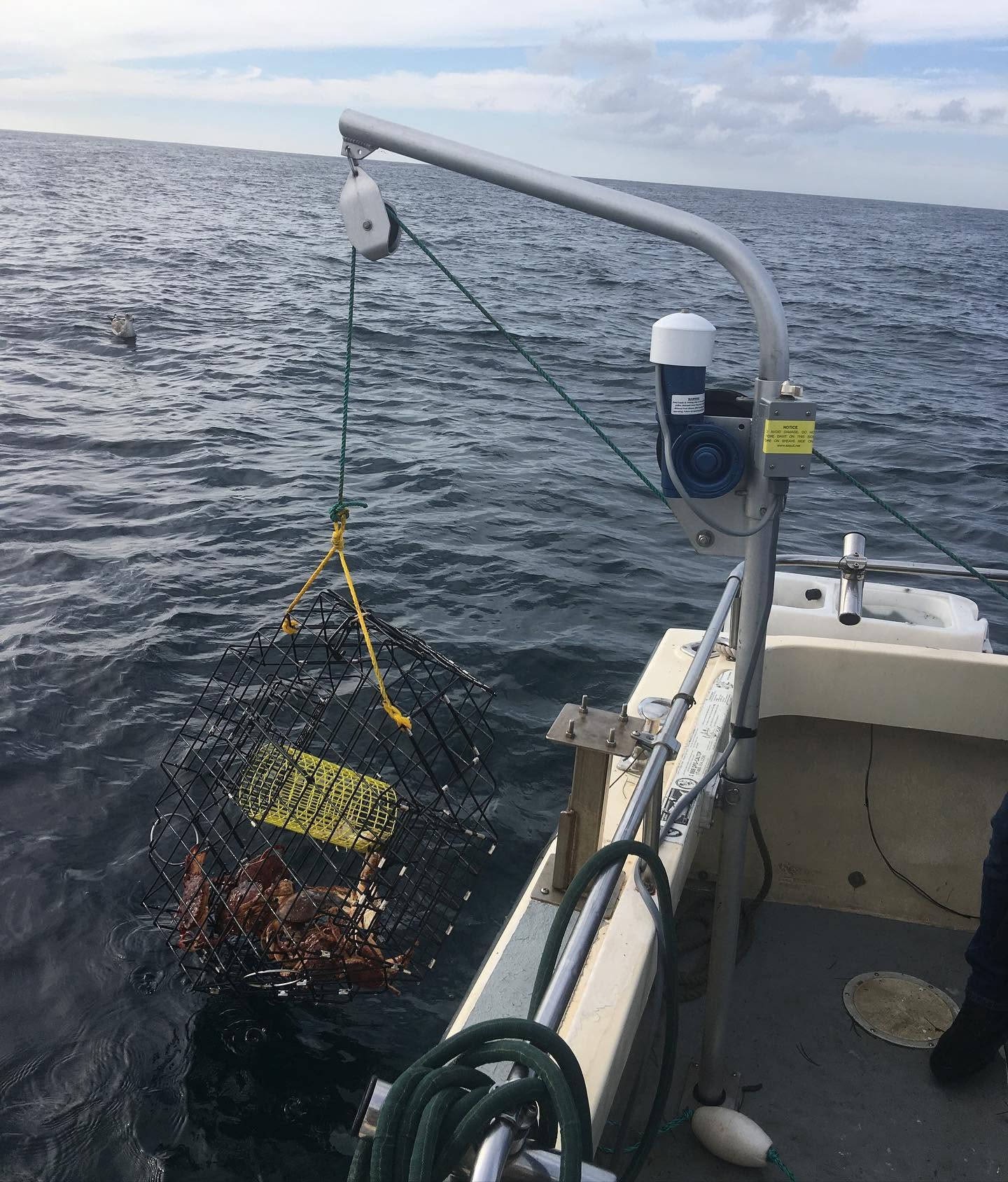


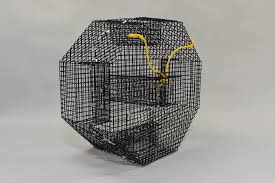
It's a question that comes up constantly once fishermen start comparing setups: my buddy runs five pots on one line with his puller, so why does mine struggle with three? The honest answer is that "how many pots" was never really the right question on its own. A puller doesn't know or care how many pots are on a line — it only knows the total weight, depth, and drag it's being asked to pull against. Two identical-looking three-pot strings can put completely different loads on a motor depending on depth, pot size, and conditions.
That said, fishermen still need a practical way to plan their setup, so here's how to actually think through pot count instead of guessing based on someone else's string.
Why Pot Count Alone Doesn't Tell You Much
A string of pots is really a cumulative load problem. Each additional pot on the line adds its own weight, plus whatever catch and bait is in it, plus the drag of more line and hardware moving through the water. A puller pulling three light recreational pots from 60 feet of water is doing meaningfully less work than one pulling three heavy commercial pots from 300 feet — even though the pot count is identical.
This is why a spec sheet listing "handles up to X pots" without qualifying depth and pot weight is only ever a rough guide. The real limit for your specific setup depends on the same factors that determine how much pulling power you actually need in the first place: pot weight, depth, and how many you're asking one motor to move at once.
How to Actually Estimate Your Realistic Limit
Rather than starting from a pot count and working backward, start from total load:
- Estimate loaded weight per pot. Not the empty weight — what it weighs full of catch, bait, and waterlogged rope on a good day.
- Multiply by how many pots you want on one string. This gives you your total pot weight, before accounting for line and depth.
- Add the weight of your line at your typical depth. Longer, deeper strings add meaningfully more rope weight than people account for, and that weight is being pulled the entire distance, not just at the pot itself.
- Compare that total against your puller's actual rated capacity — not its capacity at the shallowest, lightest-case scenario, but at the depth and load you actually fish.
- Leave a margin. Sizing right at your motor's rated maximum with zero buffer means every rough day, every extra-heavy pot, and every bit of current pushes your equipment past what it was built to handle repeatedly.
Fishermen who run into trouble almost always skipped step 3 or step 5 — they accounted for pot weight but forgot how much a long, deep line adds on its own, or they sized exactly to the rated maximum with nothing held in reserve.
What Happens When You Run More Pots Than Your Puller Can Handle
Overloading a puller doesn't usually mean it stops working outright. More often, it shows up gradually:
- Noticeably slower retrieval speed as the motor works harder than it's rated to
- Increased heat buildup in the motor during extended pulls, which accelerates wear over a season
- Higher current draw, which puts more strain on wiring that may already be sized close to its limit — see our guide on fuse and wire sizing for electric pot pullers if you're not sure your circuit has the headroom
- Premature motor failure, since a motor consistently working above its intended duty cycle wears out faster than one operating within its rated range
None of this happens on the first overloaded pull. It builds up over a season of asking a motor to do more than it was built for, which is why fishermen sometimes don't connect a puller's early failure back to a string that was always a bit too heavy for the unit.
Recreational vs. Commercial: Different Realistic Ranges
Most recreational crabbers running one or two pots in moderate depth rarely approach the limits of even a standard-duty electric puller — pot count isn't usually the bottleneck at that scale. Where this question matters most is for fishermen running multiple pots per string in deeper water, which is squarely commercial or serious semi-commercial territory.
For that kind of use, the honest comparison isn't "how many pots can a puller handle" in the abstract — it's whether you need a standard-duty unit or a higher-torque model built for sustained, heavier cumulative loads. Our Pro HT2 series was built specifically for the kind of continuous, heavy-duty pulling that multi-pot commercial strings demand, rather than asking a lighter-duty motor to stretch beyond what it's rated for.
Matching Your Puller to Your Actual String
Instead of assuming your puller can handle whatever pot count someone else runs, work backward from your own numbers:
- Calculate your realistic total loaded weight at your typical depth and pot count, not a best-case estimate
- Check your specific puller model's rated capacity rather than assuming all electric pullers handle the same load
- Size up before you size wrong — a higher-torque unit costs less over time than replacing a motor that failed from consistent overload
- Confirm your wiring can support the added draw if you're stepping up to a higher-capacity puller or adding pots to an existing string
Why This Matters for the Rest of Your Setup Too
A puller working at or beyond its realistic limit doesn't just wear out the motor — it puts more cumulative stress on everything downstream of it. A mount that's already prone to wobble gets worse under a heavier, more frequent load. Wiring that's marginal at a lighter load becomes a real problem at a heavier one. If you're planning to run more pots per string, it's worth reassessing your whole setup together rather than just the puller in isolation.
Built for the Load You're Actually Running
For nearly 35 years, EZ Puller Inc. has hand-built electric haulers in the USA sized honestly for real fishing conditions — not just best-case, shallow-water numbers. Our standard 1.5" electric pullers handle typical recreational and light commercial strings well, while our Pro HT2 series, available in both 1.5" and 2" configurations, is built for the heavier, multi-pot commercial loads that push past what a standard-duty unit is designed to sustain.
If you're not sure whether your current puller matches the string you're actually running — or you're planning to add pots and want to confirm your setup can handle it — that's exactly the kind of question worth working through before you're out on the water finding out the hard way.
Contact our team with your typical pot weight, depth, and how many pots you run per string, and we'll help you match the right puller to your actual load. Browse our full Electric Haulers lineup, or find EZ Puller equipment through our dealer network.
FAQs
Is there a standard number of pots every electric puller can handle?
No. Capacity depends on total load — pot weight, depth, and line weight combined — not a fixed pot count that applies across all models and conditions.
How do I know if I'm overloading my puller?
Watch for slower retrieval speed, unusual heat from the motor, or more frequent electrical issues like tripped breakers. These are common early signs of a puller working beyond its realistic capacity.
Does depth really make that much difference to pot count capacity?
Yes. Deeper lines add significant rope weight on top of the pots themselves, which is often underestimated when fishermen plan their string.
Can I add more pots to my string if I upgrade my puller?
Often, yes — a higher-torque unit like our Pro HT2 series can handle heavier cumulative loads than a standard-duty puller, but confirm your wiring can support the added draw as well.
What's the risk of running my puller at its exact rated maximum with no buffer?
Every rough day, extra-heavy pot, or bit of added current pushes the motor past what it can sustainably handle, increasing wear and the chance of premature failure.
Do recreational crabbers need to worry about this?
Usually not at typical recreational pot counts and depths. This becomes more relevant for fishermen running multiple pots per string in deeper water.
Will overloading my puller show up immediately or over time?
Almost always over time. It typically shows up as gradual wear, slower performance, or early motor failure rather than an immediate breakdown on the first heavy pull.
Is it cheaper to size up my puller or risk running it overloaded?
Sizing correctly upfront is almost always cheaper than replacing a motor that failed early from consistent overload, especially for commercial operations.
Does running more pots affect my wiring needs too?
Yes. A puller working harder against a heavier load draws more current, so your fuse and wire sizing needs to account for that increased draw.
How do I find out my specific EZ Puller model's realistic capacity?
Contact our team with your typical pot weight, depth, and pot count, and we can confirm whether your current model fits or recommend one that does.