

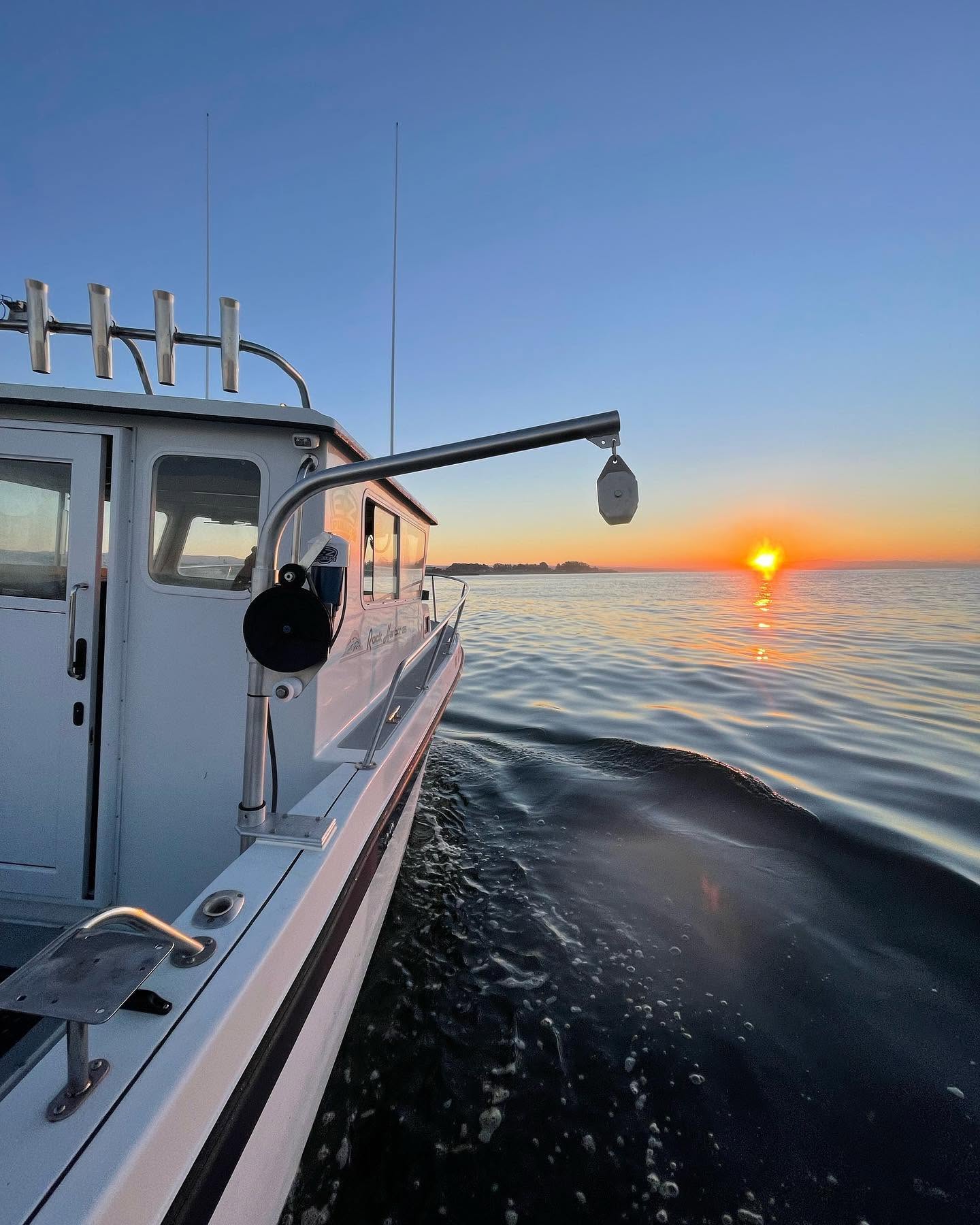
You can’t find a depth rating on most pot pullers, and that’s not an oversight. Depth isn’t a spec the way pulling load is. It’s the result of several things working together: the weight of your line, the weight of your pot, the speed of the puller, and the power your boat can deliver. Here’s how to work out how deep yours can actually go.
Short answer: There’s no fixed depth rating for an electric pot puller. Depth is limited by total load (pot plus line weight), line speed, and battery capacity. Add up your loaded pot weight and the weight of your line at depth, compare it to your puller’s rated load, and check that your wiring and battery can sustain the longer pull. Deeper sets almost always call for more power and margin.
Why Depth Isn’t a Printed Spec
A puller is rated for a maximum load, not a maximum depth. Depth matters because it changes the load. Every extra foot of water adds a foot of rope to pull, and rope has weight. In deep water with stiff or leaded line, that adds up fast. Boating Magazine notes that gear can grow heavy in deep water, especially with stiff leaded line, which is why a puller that handles 60 feet easily may struggle at 300.
So the useful question isn’t “how deep can it go” but “what’s my total load at the depth I fish.”
The Four Things That Set Your Depth Limit
1. Total load at the surface. The heaviest moment comes as the pot breaks the surface, full of catch and water, with all the line still attached. That’s the number to compare against your puller’s rating. One popular 12V unit, for example, is rated to haul 110 pounds.
2. Line weight. Add the weight of your rope for the full depth. Standard rope is lighter. Leaded or weighted line is much heavier, and it makes depth far more demanding.
3. Line speed. Speed decides how long each pull takes. That unit lists a line speed of about 140 feet per minute, which gives you a rough way to estimate time.
4. Battery and wiring. A longer pull means the motor runs longer, drawing current the whole time. Weak batteries and undersized wire show up first on deep pulls.
What Depth Does to Pull Time
Pull time is simple math: depth divided by line speed. These are illustrations at 140 feet per minute, so check your own model’s speed.
| Depth | Approximate pull time |
|---|---|
| 60 feet | under half a minute |
| 150 feet | about 1 minute |
| 300 feet | about 2 minutes |
| 600 feet | about 4 minutes |
That seems small, but multiply it by the number of pulls in a day. Four pulls a day at 600 feet is over 17 minutes of continuous motor run time, at heavy load. That’s where heat, battery drain, and wear begin to matter.
What Deeper Pulls Do to Your Battery
Longer pulls consume more amp-hours. As an illustration, a motor averaging 25 amps for a four-minute pull uses roughly 1.8 amp-hours. Repeat that over a full day and it adds up quickly, especially if the engine is off and your alternator isn’t helping.
If you fish deep, size your battery for the whole day, not one pull. Our guide on how many amp-hours an electric crab pot puller really needs walks through the calculation step by step.
Where Deep Pulling Gets Hard
Heavy leaded line. The deeper you go, the more leaded line you often use, and the more it weighs on the puller.
Long runs of rope. Several hundred feet of wet line is a lot to manage. Without something to handle it, line piles up on deck and tangles.
Current and drift. A boat swinging on the swell adds drag the static weight doesn’t show.
Heat. A motor pulling hard for several minutes at a time, repeatedly, runs warmer than one making short pulls.
Rope strength. Your rope has a breaking strength. A puller can often pull harder than your line can safely take, so check both.
Choosing a Puller for Deep Water
For deeper sets, focus on:
- Higher torque, so the motor isn’t working at its limit on every pull
- Schedule 80 davit, for stiffness under a heavy, long pull
- Davit height, so the line comes off the wheel at a comfortable height and the pot clears the rail
- Line management, such as a hands-free tensioner to keep rope feeding cleanly
- Sustained-duty rating, not just a peak figure
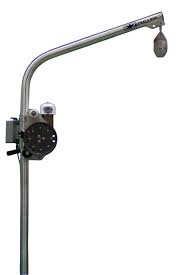
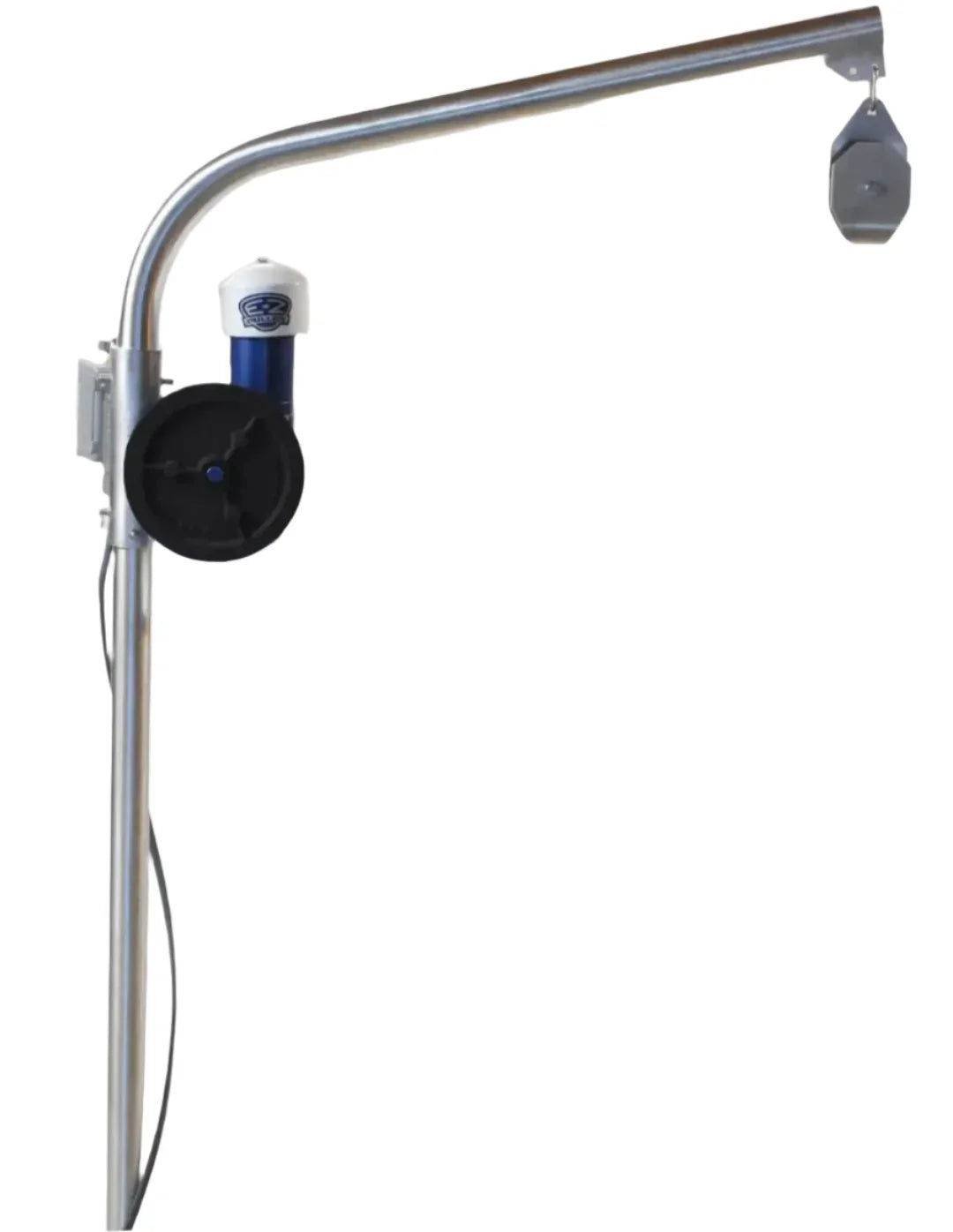
Our PRO-2 electric hauler uses a 2" Schedule 80 davit and is built for heavy, repeated loads, which is where deep water puts the most strain.
If your depth is paired with several pots on one line, read how many pots you can realistically run on one electric puller, because depth and pot count stack on each other. For shrimp strings that run several hundred feet, our shrimp pot puller setup guide covers line capacity and tensioning in detail.
How to Check Your Own Depth Limit
- Weigh or estimate your heaviest loaded pot.
- Add the weight of your line at your deepest set. Leaded line counts for more.
- Compare the total to your puller’s rated load. Leave a margin.
- Estimate pull time by dividing depth by your puller’s line speed.
- Multiply by pulls per day to see total motor run time.
- Check your battery and wiring against that run time.
- Confirm your rope’s strength is above the load you expect.
If any step comes out tight, size up before you fish, not after.
Signs You’re Past Your Puller’s Limit
- The puller slows noticeably on the way up
- The motor runs hot
- The breaker trips on deep pulls but not shallow ones
- The battery sags or dies before the day is done
- The rope strains or the davit flexes
If you’re seeing these on deep sets, start with our guide on how much pulling power you actually need for recreational vs. commercial crabbing.
FAQs
What’s the maximum depth for an electric pot puller?
There isn’t a fixed number. It depends on your pot weight, line weight, puller rating, and power supply.
Does deeper water need a more powerful puller?
Usually, yes. More line means more weight to pull and a longer, harder run for the motor.
How long does a deep pull take?
Divide depth by line speed. At 140 feet per minute, 300 feet takes about two minutes.
Will a deep set drain my battery?
It can. Longer pulls draw current for longer, so size your battery for a full day.
Does leaded line make a difference?
Yes. Leaded line is much heavier and adds a lot of load in deep water.
Can I pull from deep water with a manual puller?
You can, but the effort rises with depth. Most fishermen move to electric for deep sets.
Get a Setup Sized for Your Depth
Send us your typical depth, pot weight, and number of pots per line, and we’ll tell you whether your current puller fits or which model in our lineup does. We’ve built electric haulers in the USA for nearly 35 years, and we’d rather size you right than have you find the limit on the water.