

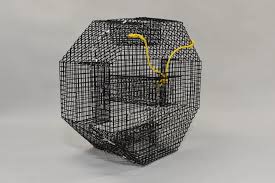
My buddy runs five pots on one line, so why does my puller struggle with three? It’s one of the most common questions fishermen ask after buying an electric puller. The honest answer is that pot count was never the right number to watch. Your puller doesn’t count pots. It feels weight, depth, and drag.
Short answer: There’s no fixed number of pots one electric puller can handle. The limit is total load: loaded pot weight, plus the weight of your line at depth, plus drag from current. Add those up, compare the total to your puller’s rated capacity, and leave a safety margin. Light recreational pots may stack several per line. Heavy commercial pots may be one or two.
Why Pot Count Alone Doesn’t Tell You Much
A string of pots is a cumulative load problem. Each extra pot adds its own weight, plus whatever catch, bait, and water it holds, plus the line and hardware between them.
Three light recreational pots in 60 feet of water are a very different job from three heavy commercial pots in 300 feet, even though the count is identical. That’s why a spec sheet that says “handles up to X pots” means little unless it also states depth and pot weight.
Even the same puller gives different answers for different gear. One popular 12V line hauler is rated for 110 pounds and draws between 14 and 35 amps depending on load. That same unit is described as handling one to four prawn traps or one heavy crab pot. One puller, one rating, and a different “number of pots” depending on what’s in the water.
Four Things That Set Your Real Limit
1. Loaded pot weight. Count a pot as it comes up: full of crab, bait, and waterlogged rope, not as it sits empty on the dock.
2. Line weight at depth. Rope weighs something, and you pull all of it. Deep sets add far more line weight than most fishermen expect. Leaded line makes it worse.
3. Pots per string. Every added pot multiplies the load the puller sees at the start of the pull.
4. Conditions. Current, wind, and a boat swinging on the swell make the puller work harder than the static weight suggests.
How to Estimate Your Own Limit
Start from total load, not pot count.
- Estimate loaded weight per pot. Use your heaviest realistic pot, not your lightest.
- Multiply by pots per string. This gives your total pot weight.
- Add line weight at your typical depth. Don’t skip this step.
- Compare the total to your puller’s rated capacity. Use the rating for the conditions you actually fish.
- Leave a margin. Sizing right at the rated maximum means every rough day pushes the motor past its limit.
Fishermen who run into trouble usually skipped step 3 or step 5. They counted pot weight but forgot the rope, or they sized exactly to the limit with nothing in reserve.
For a deeper look at matching power to your fishing, read our guide on how much pulling power you actually need for recreational vs. commercial crabbing.
What Happens When You Overload an Electric Puller
Overloading rarely stops a puller outright. It shows up gradually:
- Slower retrieval, as the motor works harder than it’s rated to
- More heat in the motor during long pulls, which speeds up wear
- Higher current draw, which strains wiring sized close to its limit
- Tripped breakers, especially on your heaviest pulls
- Premature motor failure after a season or two of running above its intended duty
If you’re already seeing nuisance trips, read why your electric puller keeps tripping the breaker before you touch the breaker size. A heavier load drawing more current is one of the most common causes.
None of this happens on the first overloaded pull. It builds up, which is why fishermen sometimes don’t connect an early failure to a string that was always a little too heavy.
Realistic Ranges: Recreational vs. Commercial
Recreational crabbing. Most recreational crabbers run one or two pots in moderate depth. At that scale, pot count is rarely the bottleneck, and a standard-duty electric puller is usually plenty.
Light commercial. Several pots in moderate depth is workable on a standard 1.5" Schedule 80 hauler like the EZ-E80, as long as you size for your heaviest pot and leave margin.
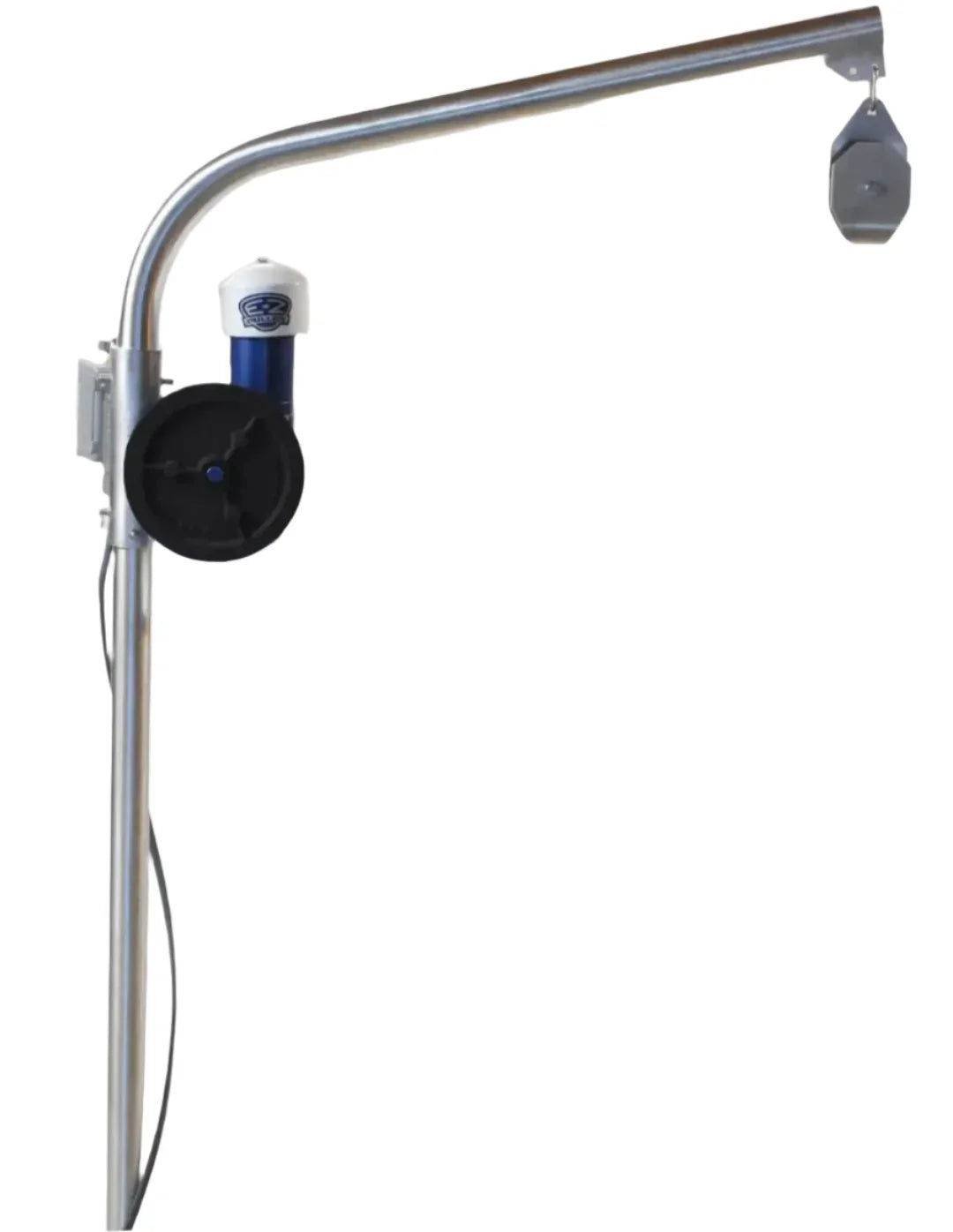
Heavy commercial. Deep water, heavy pots, and multiple pots per string push toward a high-torque unit. Our PRO-2 electric hauler uses a 2" Schedule 80 davit and is built for sustained, heavy loads.
These are starting points, not promises. Your depth, pot weight, and conditions decide the real answer.
Don’t Forget the Rest of the System
A puller working near its limit stresses everything around it.
Battery. A heavier pull draws more current for longer. Check your capacity against our breakdown of how many amp-hours an electric crab pot puller really needs.
Wiring. Undersized wire robs the motor of power and makes a capable puller feel weak.
Mount and davit. More weight means more leverage on the base. A wobbly mount gets worse under a heavier string. Our pot puller davit guide explains how size, schedule, and height affect how much load an arm can carry.
Raising your pot count without checking these is how a “bigger string” turns into a broken part.
Practical Tips to Run More Pots Safely
- Pull one pot at a time from the string if the total load is near the limit
- Shorten the line where regulations and depth allow, to cut line weight
- Upsize the puller, not the margin. A higher-torque unit costs less than replacing a failed motor
- Watch the signs. Slower pulls, a hot motor, and tripped breakers mean you’ve reached the limit
- Service your gear. A worn roller or corroded connection adds drag and heat
Quick Sizing Checklist
- Weigh or estimate your heaviest loaded pot
- Multiply by pots per string
- Add line weight at your deepest set
- Compare to your puller’s rated load
- Leave a margin of at least 20 to 25 percent
- Confirm wiring, battery, and mount can handle the draw
FAQs
Is there a standard number of pots every electric puller can handle?
No. Capacity depends on total load, not a fixed pot count.
How do I know if I’m overloading my puller?
Slower retrieval, a hot motor, or frequent breaker trips are common early signs.
Does depth really matter that much?
Yes. Deeper lines add significant rope weight on top of the pots.
Can I add more pots if I upgrade my puller?
Often, yes, but confirm your wiring and battery can support the added draw.
Do recreational crabbers need to worry about this?
Usually not at typical pot counts and depths.
Will overloading show up right away?
Almost always over time, as wear, slower performance, or early failure.
Match Your Puller to Your String
Send us your typical pot weight, depth, and number of pots per string, and we’ll tell you whether your current puller fits or which model in our lineup does. Our team has built electric haulers in the USA for nearly 35 years, and we’d rather size you right than sell you more power than you need.