

You picked the puller, planned the wire run, and now one small decision is left that most fishermen treat as an afterthought: the plug. It’s a small part carrying a big current. The wrong one runs hot, trips breakers, or corrodes shut after a single season.
Two names come up again and again when fishermen plan this connection: the Scotty downrigger plug and the Marinco ConnectPro. They aren’t interchangeable, and the difference comes down to amps and wire size.
Short answer: Match the plug to your puller’s amp draw, not to whatever is already on the boat. Scotty’s 2121 plug and socket is rated 12V and 30 amps and takes 10 to 14 gauge wire. Marinco’s ConnectPro is rated up to 40 amps and accepts heavier wire. If your puller can draw more than a plug’s rating, choose a higher-rated connector or hard-wire the circuit.
Why the Plug Matters More Than You Think
An electric puller pulls heavy current in short, hard bursts. Every connection in the circuit adds a little resistance, and resistance turns into heat. A plug that’s rated too low for the load gets warm, loses voltage, and starves the motor. The puller feels weak even though the motor is fine.
The plug also lives in the worst possible spot: low on the boat, near the water, exposed to spray and salt. A connector that isn’t sealed will corrode, and a corroded connector makes the motor draw more current to do the same work. That’s a common reason a breaker starts tripping in the middle of a season. If you’re already fighting that problem, start with our guide on why your electric puller keeps tripping the breaker.
The Scotty 2121 Plug and Socket
Scotty makes this connector for its downriggers and line pullers, so it’s the plug many boats already have wired in near the gunnel. According to the manufacturer, the 2121 marine grade plug and socket is IP67 rated, 12V, and 30 amps, and it’s sized for 10 to 14 gauge wire.
What it does well:
- Waterproof design built for exposed deck locations
- Easy to unplug, so the puller can come off the boat
- Familiar to anyone who already runs Scotty downriggers
Where to be careful:
- Thirty amps is a hard ceiling. A puller that draws more than that under load will overheat the plug or trip the fuse.
- Ten gauge is the heaviest wire it accepts. Longer runs or higher draw may call for heavier wire than the plug can take.
- A downrigger outlet already on your boat was wired for a downrigger. Check what it’s actually fused and wired for before you plug a puller into it.
The Marinco ConnectPro
Marinco’s Connect Pro is a locking plug and receptacle system originally built for trolling motors. Retail listings, including West Marine’s ConnectPro page, list a maximum rating of 40 amps. The plug accepts 16 to 8 gauge wire, and the receptacle accepts 10 and 8 gauge, with an adapter available for 6 gauge. The plug uses an O-ring seal for waterproof connections, and the receptacle has drain holes and a sealing cap.
One popular 12V line hauler ships with a ConnectPro plug and receptacle, and its maker recommends a 40-amp fuse.
What it does well:
- Higher rating than the Scotty plug
- Accepts heavier wire, which suits longer runs
- Locking design resists vibration and accidental disconnects
Where to be careful:
- A fuse and fuse carrier are sold separately and required for installation
- Forty amps is still a ceiling. Marinco sells a 70-amp connector system for loads above that.
- You need the matching receptacle. Don’t mix connector brands.
Side by Side
| Feature | Scotty 2121 | Marinco ConnectPro |
|---|---|---|
| Rating | 12V, 30 amps | Up to 40 amps |
| Wire size | 10 to 14 gauge | Plug 16 to 8, receptacle 10 and 8 |
| Waterproofing | IP67 rated | O-ring seal, drain holes, sealing cap |
| Built for | Scotty downriggers and line pullers | Trolling motors and 12V accessories |
How to Choose the Right Plug
1. Find your puller’s amp draw. Check the manual or ask the manufacturer for the current at working load, not the no-load figure. Our breakdown of how many amp-hours an electric crab pot puller really needs explains how draw and battery capacity connect.
2. Choose a plug rated above that draw. Leave headroom. A plug running at its limit on every pull will run warm.
3. Match the wire gauge. The plug’s terminals have to accept the wire your run requires. Calculate gauge from the amp draw and the round-trip length of the wire, then confirm the plug takes it.
4. Keep the fuse in order. The fuse protects the wire, so size it to the wire. The plug’s rating should be at or above the fuse rating. A fuse that exceeds the plug’s rating leaves the plug unprotected.
5. Buy a matched set. Use the plug and receptacle from the same system.
When to Skip the Plug and Hard-Wire
A plug is convenient if you remove the puller after each trip. But every connector is another place for resistance and corrosion. If the puller stays on the boat all season, or if your draw is high, a hard-wired circuit with sealed, marine-rated connections and a switch can be the more reliable choice. That’s especially true on commercial boats. Our guide to converting a manual crab pot puller to electric covers the switch, wiring, and battery side of a full setup.
Install and Care Tips
- Use marine-grade tinned copper wire. Bare copper corrodes quickly in salt air.
- Crimp and seal every connection with heat-shrink connectors.
- Apply dielectric grease to the pins before you plug in.
- Mount the socket where it stays as dry as possible, and keep the cap closed when it’s empty.
- Check polarity before the first test.
- Rinse and inspect the plug each season. Green or white corrosion, discolored pins, or a plug that feels hot after a pull all mean it’s time to replace it.
Common Mistakes
- Plugging a puller into a downrigger outlet without checking its fuse and wire gauge
- Using a plug rated below the puller’s peak draw
- Buying a plug whose terminals can’t accept the wire your run needs
- Mixing a plug from one brand with a receptacle from another
- Oversizing the fuse to stop nuisance trips, which removes the protection
What to Do With an EZ Puller
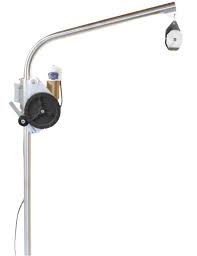
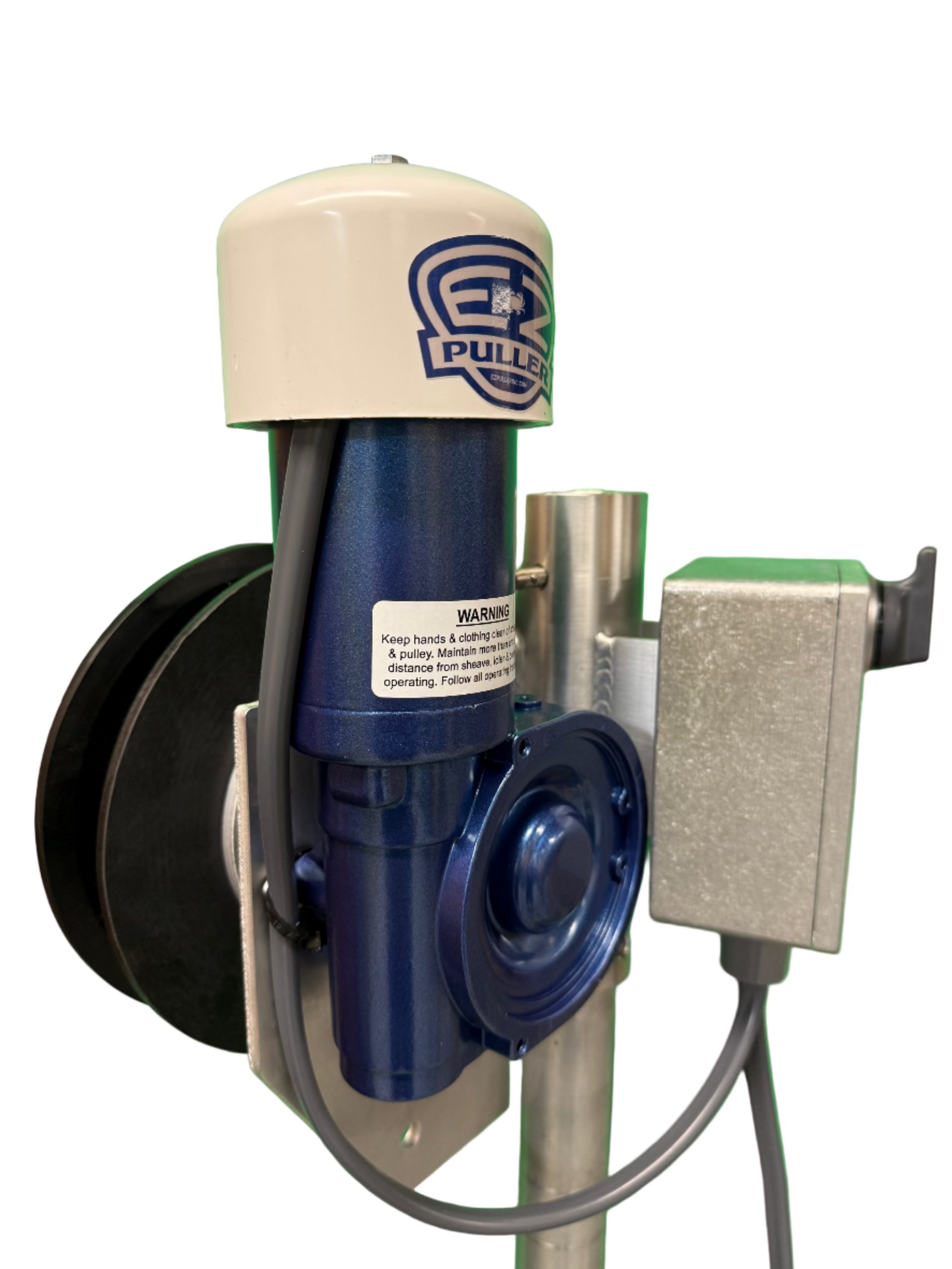
Don’t assume the plug from your old downrigger setup will carry your puller. Check your model’s instructions for amp draw, fuse rating, and wire size, then choose the connector from there. Our electrical accessories include a 12VDC 50-amp on/off switch made for EZ Puller models, which gives you a dedicated, properly rated way to control power at the helm or the davit.
FAQs
Can I use my Scotty downrigger plug for an electric pot puller?
Only if your puller’s peak draw stays under the plug’s 30-amp rating and your wire fits its 10 to 14 gauge range. Check both before you rely on it.
Is the Marinco ConnectPro better than the Scotty plug?
It carries more current and accepts heavier wire, so it suits higher-draw pullers. The better plug is the one rated for your puller’s draw and wire size.
Do I need a fuse if I use a plug?
Yes. The plug doesn’t protect the wire. A fuse or breaker close to the battery does.
Can I mix a Scotty plug with a Marinco receptacle?
No. Each system is built as a matched pair.
What happens if the plug is rated too low?
It heats up, loses voltage, and can trip the fuse or fail. The puller will feel weak on heavy pulls.
Should I hard-wire instead of using a plug?
If the puller stays on the boat or draws a lot of current, hard-wiring with sealed connections and a switch is often more reliable.
Get the Wiring Right the First Time
Tell us your puller model, battery location, and run length, and we’ll help you choose the plug, wire, and fuse that match. Our team has built electric haulers in the USA for nearly 35 years, and we’d rather help you size the circuit before you wire it than troubleshoot it after. Browse our full electric haulers to see the units this wiring is built for.