

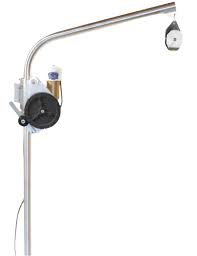
Once you drill into your gunnel, there's no taking it back. That's what makes mounting a davit feel higher-stakes than most other boat projects — you're putting permanent holes in fiberglass or aluminum, and if you get the load path wrong, you're not just dealing with a wobbly mount. You're dealing with cracked gelcoat, a soft spot developing under the surface, or a mount that slowly works itself loose because the gunnel underneath it was never built to take that kind of point load in the first place.
The good news is that gunnel stress is almost entirely preventable. It comes down to understanding what a loaded davit actually does to the structure underneath it, and mounting in a way that spreads that load out instead of concentrating it on a few small screws.
What "Stressing the Gunnel" Actually Means
A davit under load isn't just holding the weight of a pot. It's holding that weight at the end of a lever arm, which multiplies the force at the mounting point well beyond the pot's actual weight. A 30-pound pot swinging on a two-foot boom doesn't put 30 pounds of straight-down pressure on your gunnel — it puts leveraged, twisting force on it, concentrated right at the mount.
If that mount is anchored into gunnel material that isn't reinforced to handle it, one of a few things tends to happen over time:
- Gelcoat cracking around the mounting holes as the fiberglass flexes under repeated leveraged load
- Soft spots developing in the core material beneath the gunnel surface, especially on boats with balsa or foam coring
- Elongated or stripped mounting holes as the hardware works against unsupported fiberglass instead of solid backing
- Visible flex in the gunnel itself when the puller is under a heavy pull, even if the mount hardware is perfectly tight
None of this happens overnight. It shows up gradually, which is exactly why a lot of fishermen don't connect a season or two of hard use to a mounting job that skipped a backing plate.
Why a Backing Plate Isn't Optional
The single biggest factor in whether a davit mount stresses your gunnel is whether the load is spread across a wide backing plate or concentrated on a handful of small fasteners.
Bolts alone, even stainless ones torqued down tight, are only as strong as the material they're threaded into. On a cored or thin-hulled gunnel, that material often isn't strong enough on its own to resist the twisting force a loaded davit puts on it. A backing plate — sized larger than the mount's footprint and installed on the underside or interior face of the gunnel — spreads that same load across a much wider area, so no single point is taking the full stress.
This is the difference between a mount that stays solid for years and one that starts showing hairline cracks by the end of the season.
Where and How to Position the Mount
Getting the location right matters as much as the hardware itself.
Mount over solid backing whenever possible. If your boat has structural framing, stringers, or reinforced sections near the gunnel, positioning your mount to land over or near that structure gives you a stronger base than an open, unsupported span of fiberglass.
Avoid mounting directly over seams or hull-to-deck joints. These areas are often less rigid than the surrounding gunnel and aren't ideal load-bearing points for a mount that's going to see repeated stress.
Position the mount to keep the load path as vertical as possible. The further out and higher a puller sits relative to its mounting point, the more leverage it generates. Keeping the mount reasonably close to the gunnel edge, rather than extended way out on a long unsupported arm, reduces the twisting force transferred into the hull.
Check for flex before you commit to a spot. Press firmly on the gunnel section you're considering before drilling. If you can feel noticeable give under hand pressure alone, that's a sign the area needs reinforcement — or a different location — before you mount anything permanent there.
Sealing the Holes Properly
Every hole you drill into a gunnel is a potential entry point for water, and water intrusion into cored fiberglass is how soft spots start, independent of whatever hardware you're mounting. Bed every fastener with marine sealant rated for below-waterline or high-moisture use, not just a general-purpose caulk. This step gets skipped more often than it should, and it's one of the cheapest, easiest parts of the whole install to get right.
Choosing the Right Mount for Your Gunnel
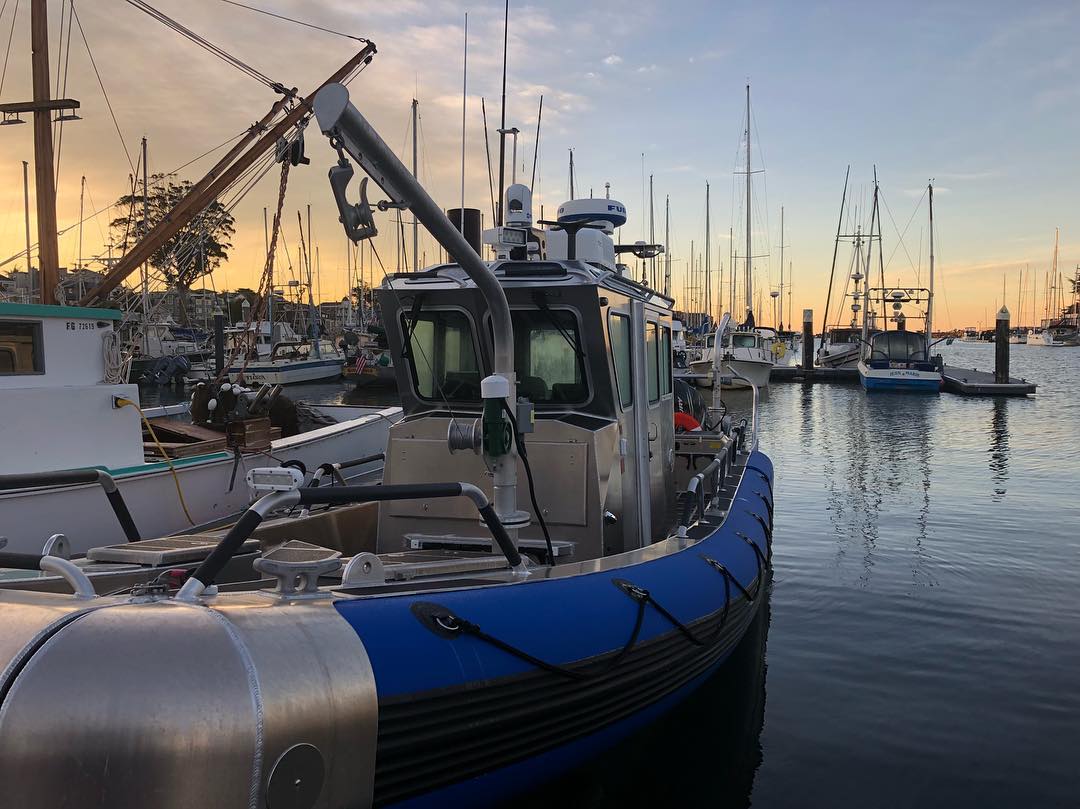
Not every mounting style puts the same stress on a gunnel. A gunnel mount sits directly on the rail and is a good fit when you have solid, accessible gunnel structure to work with. A deck mount moves the load point down onto the cockpit floor instead of the rail edge, which can be the better choice on boats with thinner or less-reinforced gunnels, since deck structure is often more heavily built than the rail itself.
If you're not sure which style suits your boat, it's worth reading through our earlier post on why crab pot puller mounts wobble and how to fix it — a lot of the same fit and sizing issues that cause wobble are the same ones that put unnecessary stress on your gunnel in the first place. Getting the mount size and style right solves both problems at once.
Why We Build Sleeved, Two-Piece Mounts
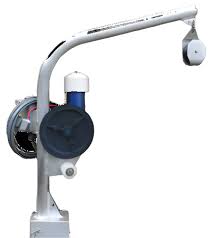
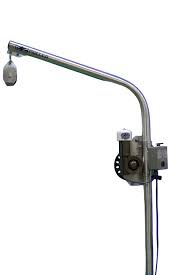
Our davit and gunnel mounts are built as sleeved, two-piece aluminum systems specifically to distribute load evenly and avoid concentrating stress on a small contact point. A properly sized, sleeved mount paired with correct backing does most of the work of protecting your gunnel before you even factor in installation technique.
We carry both 1.5" davit mounts and 2" davit mounts, along with individual base plates and sleeves if you're upgrading an existing install rather than starting fresh. Pair the right mount with your electric hauler or manual puller, and the whole system is built to swing freely under load instead of transferring that load straight into your hull.
What to Check Before You Drill
- Confirm your davit pipe diameter so you order the correct 1.5" or 2" mount — an oversized or undersized mount fights the fit from day one
- Locate solid backing structure near your intended mounting spot before committing to a location
- Plan for a backing plate, even if your gunnel feels solid — it's cheap insurance against stress that builds up gradually
- Choose gunnel vs. deck mounting based on how your boat's rail is actually constructed, not just where it's most convenient
- Have marine sealant on hand before you drill, so every hole gets bedded properly the first time
The Whole System Has to Work Together
A well-mounted davit that doesn't stress your gunnel is only one piece of a setup that holds up over time. If your mount is solid but your puller is drawing more current than your wiring was sized for, you'll still run into problems down the line — our guides on fuse and wire sizing for electric pot pullers and wiring straight to the battery vs. through a fuse block cover that side of the setup in detail. Getting the mechanical and electrical sides right together saves you from troubleshooting two separate issues later in the season.
Built to Last, Not Just to Fit
For nearly 35 years, EZ Puller Inc. has hand-built pullers, mounts, and hauling systems in the USA from our own original designs. A mount is only as good as the gunnel it's attached to, which is why we build ours to distribute load properly instead of concentrating it — but the installation side, backing plate and all, is just as much a part of protecting your boat as the mount itself.
If you're planning a new davit install or replacing an old one that's already started stressing your gunnel, contact our team with your boat's gunnel construction and davit size, and we'll help you get the mount and mounting approach right the first time. You can also browse our full Mounts collection or find EZ Puller gear near you through our dealer network.
FAQs
Do I need a backing plate for every davit mount installation?
In almost every case, yes. Bolts alone rarely provide enough load distribution on their own, especially on cored or thinner-hulled gunnels.
How do I know if my gunnel can handle a davit mount without reinforcement?
Press firmly on the area you're considering. Noticeable flex under hand pressure is a sign the spot needs reinforcement or a different mounting location.
Is a deck mount better than a gunnel mount for protecting my boat?
It depends on your boat's construction. Deck mounts move the load onto the cockpit floor, which can be a better option if your gunnel isn't heavily reinforced.
What happens if I don't seal the mounting holes properly?
Water can work into the core material over time, leading to soft spots that are far more expensive to repair than the cost of proper sealant upfront.
Can gunnel stress from a davit mount be repaired once it starts?
Minor gelcoat cracking can sometimes be repaired, but soft spots in the core material typically require more involved fiberglass repair. Prevention is far easier than the fix.
Does the size of my puller affect how much stress the mount puts on my gunnel?
Yes. Larger, more powerful haulers pulling heavier pots generate more leveraged force at the mount, which makes correct backing and positioning even more important.
Should I mount my davit near a structural bulkhead or stringer if possible?
Yes, positioning your mount over or near existing structural reinforcement gives you a stronger base than an open span of unsupported gunnel.
How is a sleeved mount different when it comes to protecting my gunnel?
A sleeved, properly sized mount fits tightly against the davit pipe and distributes load evenly through the mount body, rather than concentrating stress at a loose or point contact.
Can I move a davit mount to a new location if I chose a bad spot the first time?
Yes, though it means patching the old holes properly and reassessing backing at the new location before drilling again.
Who can I ask if I'm not sure my boat's gunnel can handle a davit mount?
Reach out to our team with your boat's make, model, and gunnel construction — we can help you figure out whether reinforcement is needed before you drill.